How to Stop Your Dog Pulling on the Lead (Step by Step)

About the products below: they are sold in the TopTierFind shop, so we earn money if you buy one. We have not tested them ourselves. Every product detail comes from the product listing; every piece of advice comes from the source linked next to it.
The short answer: dogs pull because pulling gets them where they want to go. The fix, according to the RSPCA, is to teach your dog that a loose lead is the fastest way forward. It takes time, patience and consistency. A good harness makes walks more comfortable while you train, but it doesn’t replace the training.
The RSPCA’s 5-step method
- Start still and quiet. Give your dog the full length of the lead. Stay still while they ignore you, and the moment they pay attention to you, praise them and give a treat.
- Move off once you have their attention. Use your voice and treats to keep them close, and reward them whenever they walk on a loose lead.
- Stop every time the lead goes tight. Stand still and quiet until they pay attention and come back closer, then reward and move off again. This has to happen every single time.
- Keep sessions short and regular.
- Practise with distractions. Put a toy on the floor. If your dog pulls towards it, stop and call them back. Their reward for walking on a loose lead is getting to the toy, so they learn that pulling slows things down.
The RSPCA’s tip: make the space around you fun and rewarding, so your dog wants to stay close.
Quick checklist for every walk
| Do | Avoid |
|---|---|
| Carry small treats and reward a loose lead straight away | Pulling back or yanking the lead |
| Stop the moment the lead tightens | Letting pulling “work” some of the time |
| Short, regular practice sessions | One long, frustrating session a week |
| A comfortable harness while you train | A retractable lead for a dog that still pulls (it rewards pulling with more length) |
Gear that can help while you train
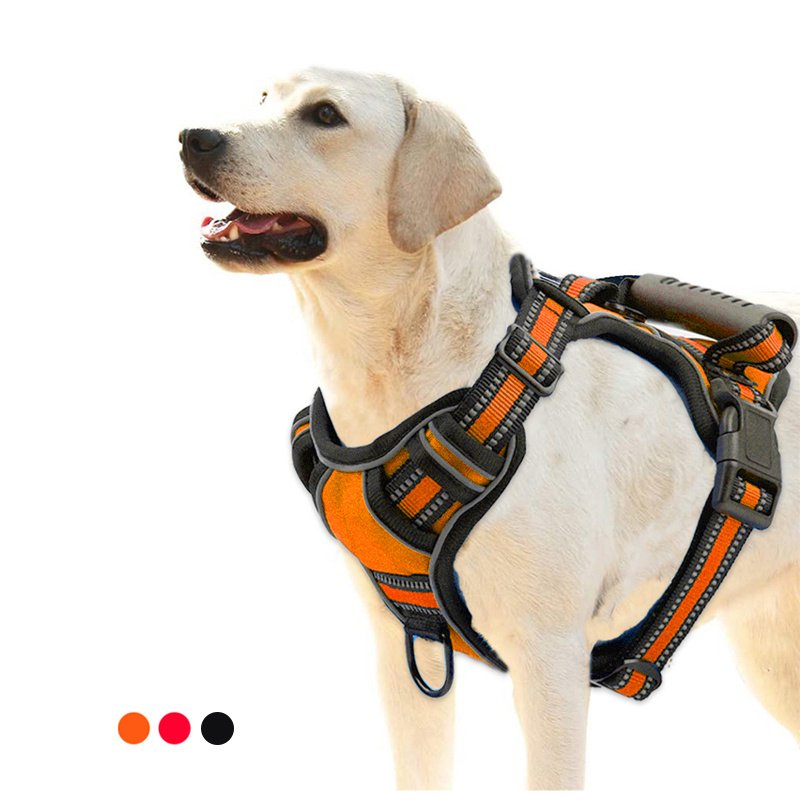
Premium No-Pull Adjustable Dog Harness ($19.99)
- Sits around the chest and back rather than the neck (seller listing)
- Adjustable fit
- Polyester construction
A fixed-length lead (about 1.5–2 m)
- Woodgreen advises a fixed lead of this length while training
- Avoid extendable or retractable leads until your dog walks nicely on a normal lead
Any standard fixed-length lead works; you don’t need a special one.
Introduce a new harness gently and positively (Dogs Trust), and check it fits without rubbing behind the front legs. Gear makes walks more comfortable; it doesn’t teach your dog to stop pulling.
More help: Dog training hub · 5-question training quiz
When to get help
If your dog lunges, is fearful or reactive on walks, or nothing changes after a few weeks of consistent practice, ask your vet or a qualified, reward-based trainer for help.
Sources
Take our free Dog Training Match quiz
Explore relevant guidance and, where available, product comparisons based on your answers.
